 One interesting feature Intel showed off at the recent vPro day was called SmartHDR display. SemiAccurate first saw this a few months ago in Arizona but it is in production devices now.
With the introduction of Panther Lake vPro SKUs, there is now a model, the HP EliteBook X 14, that has all the ingredients for SmartHDR on the market. Previously called SmartPowerHDR when it was in prototype form, this tech allows a laptop to run SDR content on OLED HDR panels without the associated power hit. This may seem like an obvious thing, after all if the content is SDR, why does it consume HDR power?
The short answer is that when you put a panel in HDR mode, the contrast range is much higher than in SDR mode. Duh. This consumes more power, around 50% or more on OLED panels. Since HDR mode either is on or off, usually set for the PC not for an application, running mixed SDR and HDR content on an OLED panel, something we all do if we have a capable laptop, means we take the hit for the full HDR power draw. Sure you can set the panel to SDR mode but then why did you buy a pretty OLED panel again?
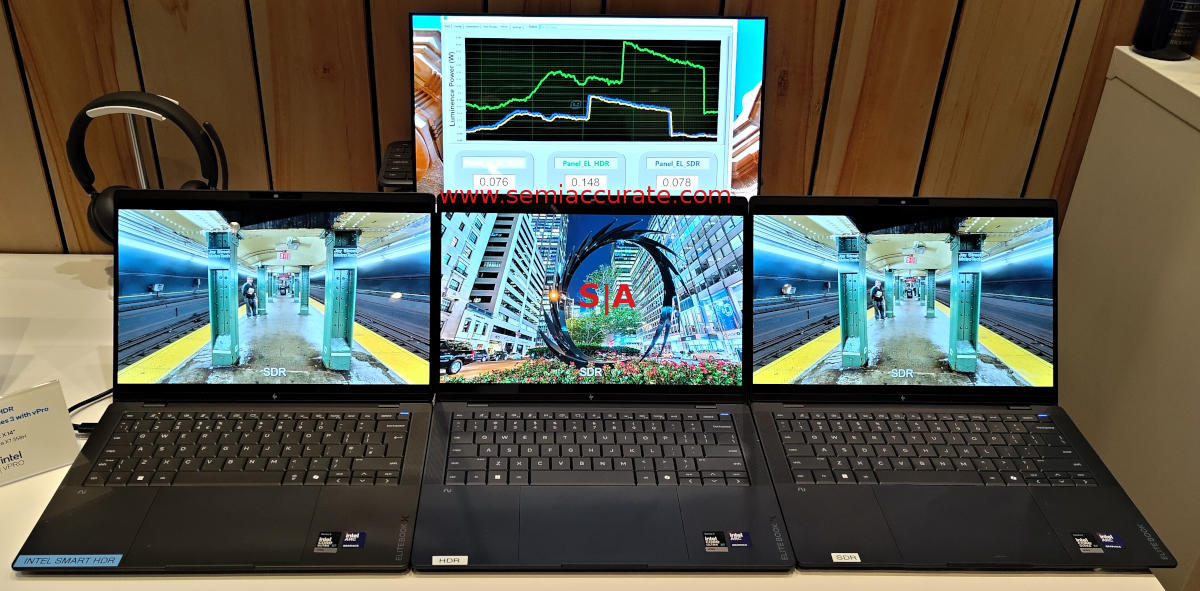
This is a spot the difference game, can you?
Enter SmartHDR which is close to the optimal answer, SDR power on an HDR panel in HDR mode when displaying SDR content. Yes that parses. It works, see above but do note that the videos playing were out of sync when the picture was taken, when they are in sync, the graphs line up. We have seen it on multiple occasions, no conspiracy here, look at the pictures if you don’t believe it.
The way SmartHDR works is the PC hardware calculates the max and average luminance needed per frame. This is passed to the graphics driver which sends that value to the panel TCON (Timing CONtroller) which is the part that tells the panel what to display when and how. Basically it turns a data stream into actionable pixels for the panel. That panel then displays the needed data in the most efficient way. See, simple, and all for a claimed 20% panel luminance power savings. (Note: All the demos SemiAccurate has seen of this tech deliver far more than that 20% but there might be something we are missing.)
So in the end, SmartHDR basically means you can have an HDR OLED panel on your next laptop without the worry of high power draw when you are doing anything but watching full screen HDR content. For almost anyone outside the video editing world, this means nearly all the time. Intel addressed the issue in a pretty smart way, pun intended. If the demo carries over into the real world, we really think it will, then this is a clear win for OLED panels.S|A


Charlie Demerjian
Latest posts by Charlie Demerjian (see all)
- Intel Cuts HDR OLED Panel Power with SmartHDR - Apr 2, 2026
- ASBOtech Makes A Real-World Useful Smart Ring - Apr 1, 2026
- Why Does Clearwater Forest Have Two PCBs? - Apr 1, 2026
- Intel Celebrates vPro 20th Anniversary With New Hardware And Software - Mar 25, 2026
- Anritsu Has The Nicest Testers At MWC - Mar 16, 2026
